Good to know
Frequently asked questions
Everything students, families, volunteers and supporters ask us most often — in one place.
The summer school
When does the summer school happen?
First half of August every year.
What are the timings of the school?
10:00 am – 4:30 pm each day, Monday to Thursday, across two weeks.
How many places are available during the summer school?
30 places. In 2025 we received 315 applications for those places.
Is the travel during the summer school covered?
Yes — all travel within TfL London Zones 1–6 is covered, along with lunch and every piece of learning material.
Where is the summer school held?
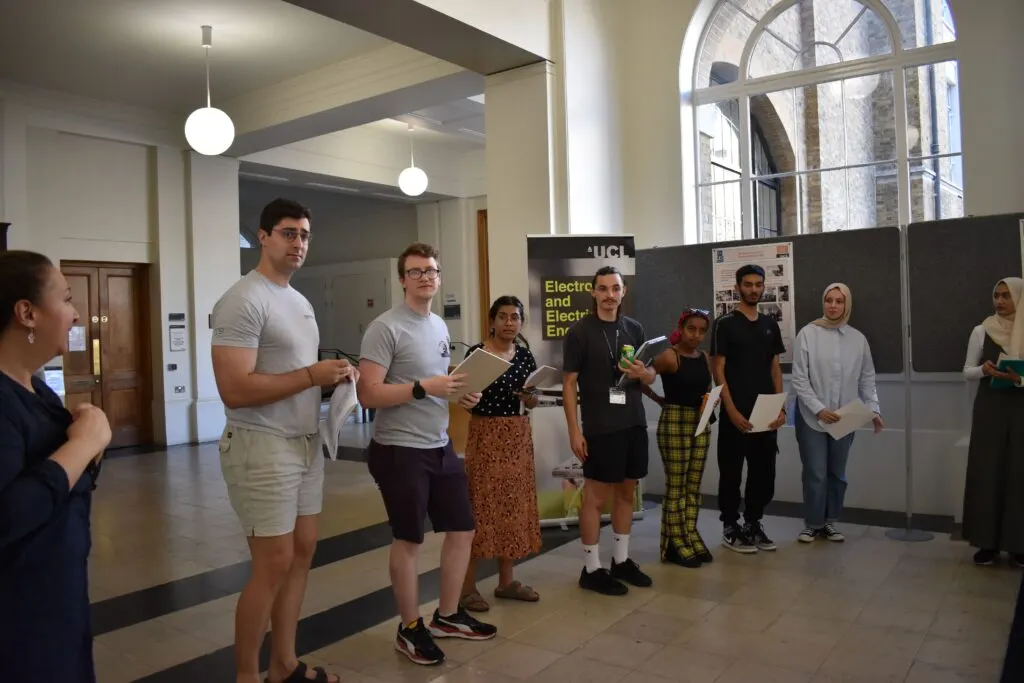
At the Department of Physics & Astronomy, University College London, in Bloomsbury, central London. Nearby Underground stations include Euston, Russell Square and Goodge Street.
What is taught?
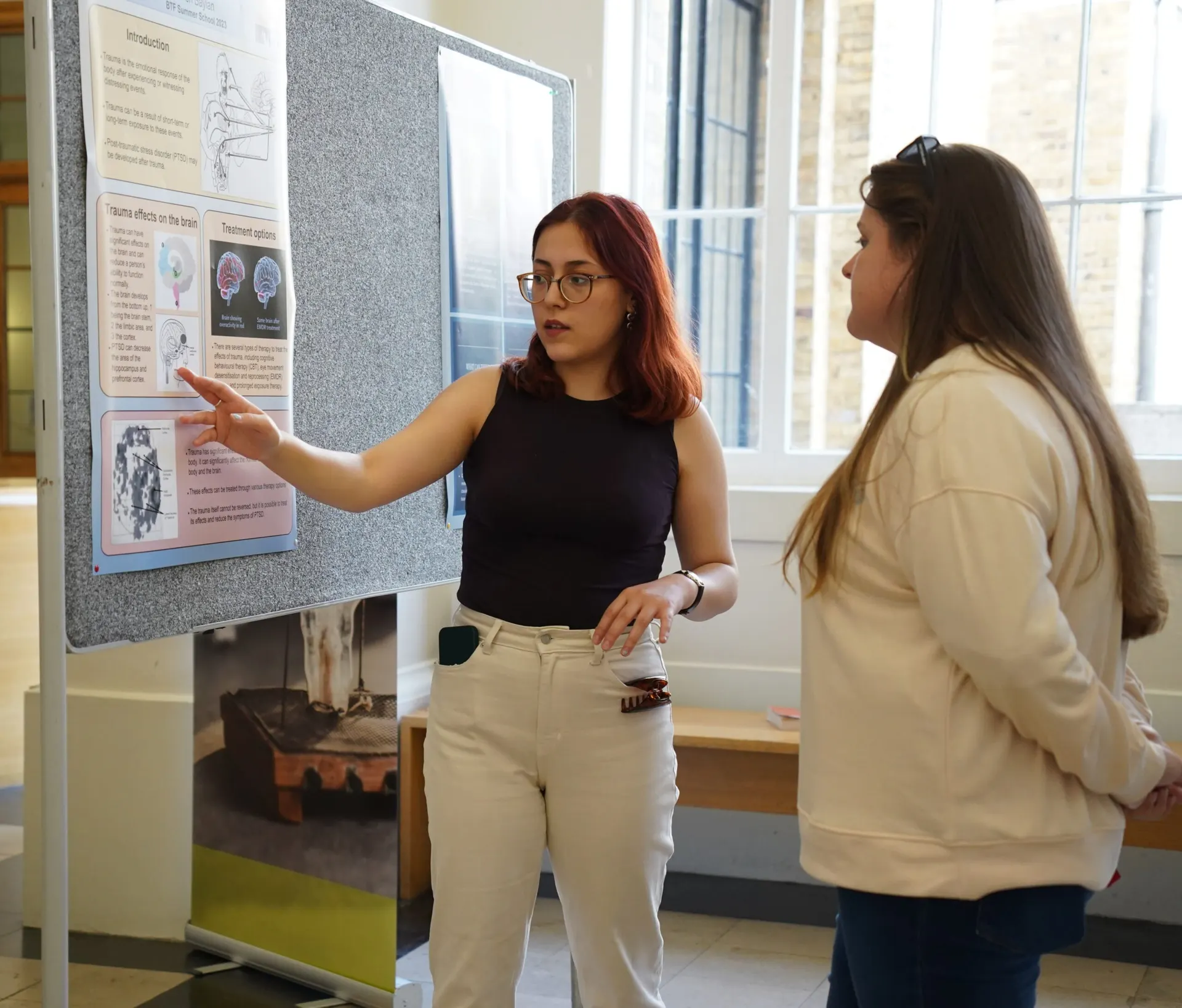
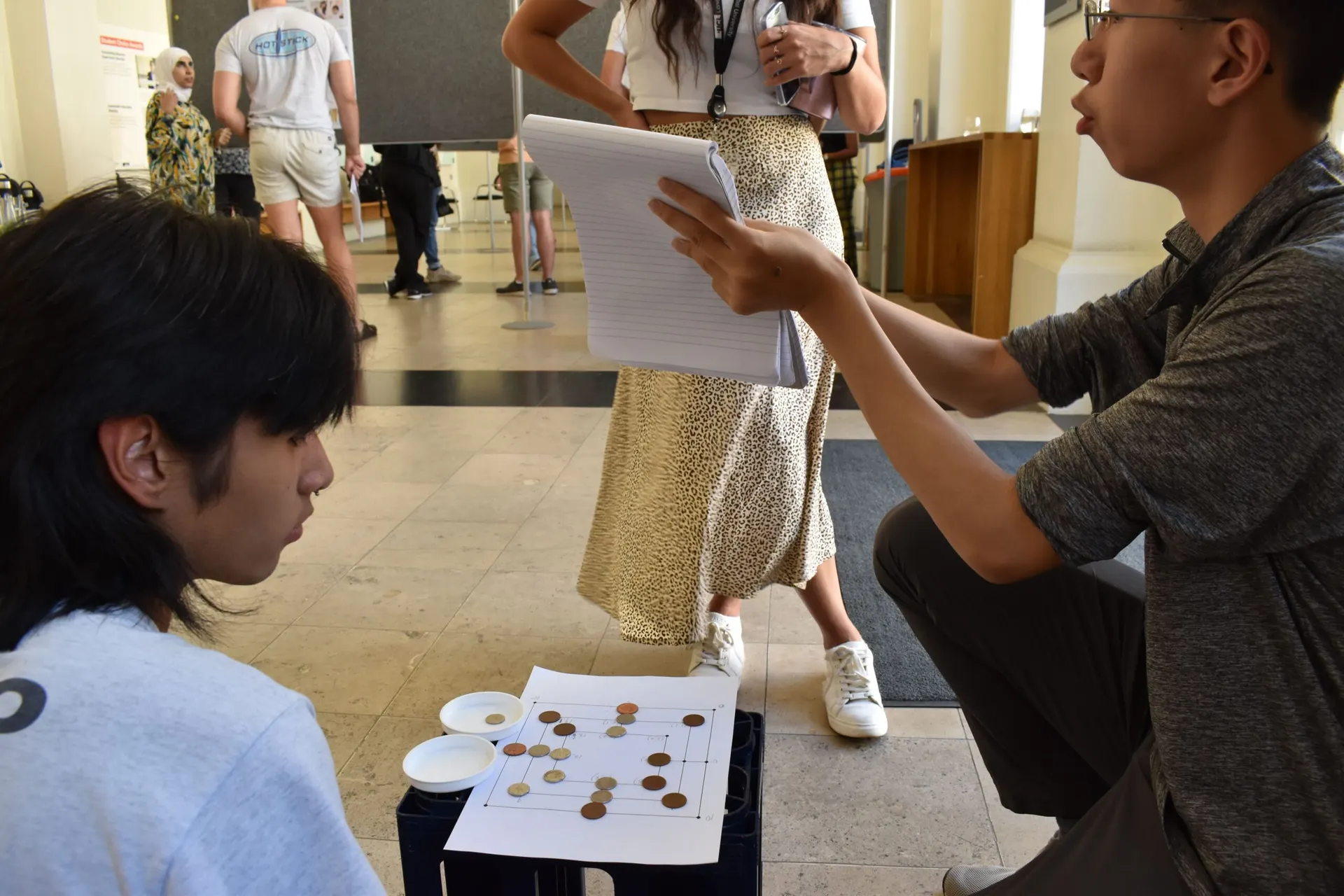
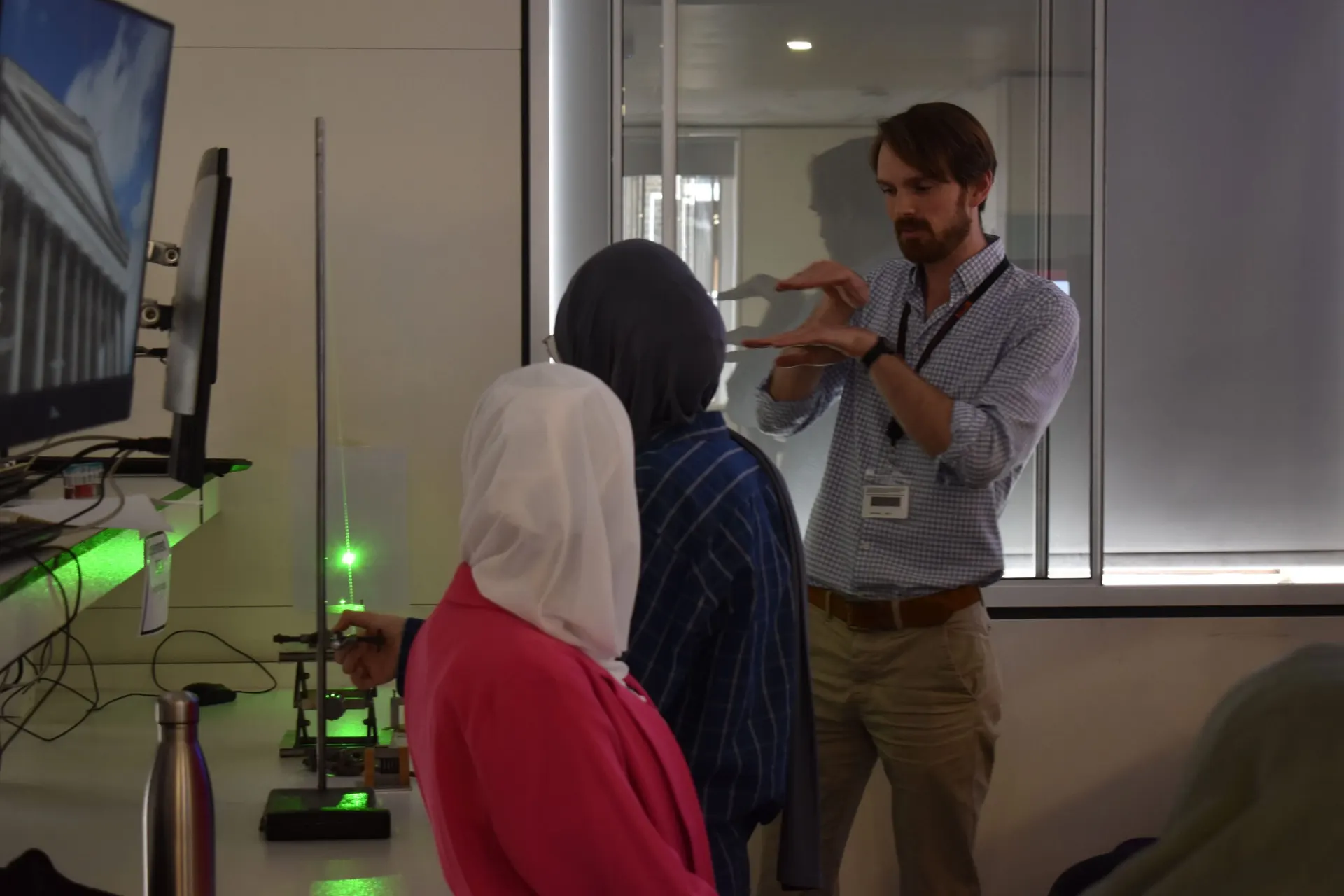
Mornings are English for Science in small, level-based groups. Afternoons are practical STEM workshops in physics, chemistry and biology, plus IT and coding skills — from building a microscope and extracting DNA from fruit to programming a robot and building a CV.
Eligibility & applying
Who can apply?
Young people aged 16–22 from refugee, asylum-seeking and forced-migrant backgrounds who have the ambition to study science, engineering, technology or mathematics at a UK university.
What do I need to submit?
Two forms: the student application form and the parent/guardian consent form. Both must be submitted for an application to be complete.
When is the application deadline?
Applications close at 5 pm, Wednesday 15th July 2026.
How much does it cost?
Nothing. The programme is entirely free, including travel, food and materials.
Do I need a certain level of English?
No. The programme was created specifically for young people whose education has been interrupted and whose English is still developing — English classes are grouped by level so everyone is taught at the right pace.
Online mentoring
When does the mentoring scheme run?
Annually, from October until March, supporting a new cohort of young people each year.
What happens in a mentoring session?
Weekly 1-2-1 or small group sessions in STEM, IT and English, tailored to the student. Mentors help with homework and coursework, and also with CVs, cover letters, university applications and mock interviews — including medical school admissions and Oxbridge interviews.
Which subjects are covered?
Biology, chemistry, mathematics, physics, computer science and English.
How are students matched with mentors?
On subject need, level and goals — for instance a STEM student is paired with a mentor from a STEM background, so existing expertise is used to the full.
Volunteering
Who can volunteer?
Undergraduates, postgraduates, PhD students, postdoctoral researchers and educators in STEM or language teaching.
How much time does it take?
Mentors typically teach for about one hour per week and spend additional time preparing. Expect roughly 4–6 hours a week in the first few weeks, reducing to 2–3 hours once a routine is established.
Do I need teaching experience?
No. For many of our mentors it is their first mentoring experience. Patience, consistency and a willingness to adapt matter most, and the team supports you throughout.
How do I get started?
Fill in the form on our volunteer page, or email contact@bridgingthefuture.org telling us what you would like to help with.
The charity & donations
Is Bridging the Future a registered charity?
Yes — Registered charity in England and Wales, No. 1201227.
Where do donations go?
Directly into running the programmes: student travel across TfL Zones 1–6, lunch during the summer school, and all learning materials. Every organiser and mentor is a volunteer.
How much has been raised so far?
Over £50,000 has been raised to deliver summer schools since 2018, including £8,500 in funding from UCL in 2025.
How many young people has the charity supported?
133 students through the programmes since 2018 (excluding the COVID years 2020–21), with students coming from more than 20 countries. A further 32 students have been supported through online mentoring since 2022.
Can I give monthly?
Yes. The donation form lets you choose between a one-time gift and a monthly donation, and you can set a custom amount.
Still stuck?
Ask us directly
Email contact@bridgingthefuture.org and a member of the team will get back to you.