Most of the young people who reach our programmes were sent by an adult. Not by a marketing campaign, not by a search engine — by a social worker, a college tutor, a foster carer or a volunteer at a drop-in who happened to know we existed.
That is the honest mechanism of access in this sector, and it puts a particular kind of responsibility on the professionals around a young person. You do not need to be an education specialist. You need to know roughly what exists, roughly when the deadlines fall, and which three questions to ask early enough for the answers to matter.
This guide is that. It is written for the adult in the room, not for the student.
- Questions that determine almost everything
- 3Questions that determine almost everythingAge, status and prior schooling — asked early, they change the plan
- Months in a realistic application cycle
- 12Months in a realistic application cycleFrom "what do I do?" to a submitted application
- Applications we received for 30 places in 2025
- 315Applications we received for 30 places in 2025Free programmes exist; almost nobody finds them unaided
Start with three questions
Everything downstream depends on the answers to these, and they are worth establishing in the first conversation rather than the fifth.
1. How old are they, exactly?
Not “school age” — the actual date of birth, and whether it is disputed. Age determines which duties apply, which institutions will take them, and how much time is left.
- Under 16. Compulsory school age. The local authority has a duty to find a school place, and the working target is twenty school days. Push on it.
- 16–18. The participation requirement applies: education or training until 18. In practice this usually means a further education college.
- Over 18. No participation duty. Everything from here is voluntary, self-directed and much harder to access — which is exactly why the years before 18 matter so much.
2. What is their immigration status, and is it settled?
You do not need to advise on this — you should not — but you need to know it, because it determines whether higher education is financially possible.
Broadly, in England: someone with refugee status or humanitarian protection is generally eligible for home fee status and student finance. Someone with a pending asylum claim is generally treated as an international student and is not eligible for a tuition fee loan. That distinction is worth tens of thousands of pounds a year, and it is not visible from the outside.
3. What schooling do they already have — and can any of it be evidenced?
Ask what they studied, to what level, in what language, and whether anything is documented. Then ask whether documents can realistically be obtained.
If the answer is no — which it often is — that is not the end of the conversation. It shifts the route from “apply with qualifications” to “apply through a foundation or preparatory year”, which exists precisely for this situation. Knowing that early saves a year.
The twelve-month sequence
This is the shape of a realistic year for a 16–18 year old aiming at further or higher education. It assumes a September or October start point.
| Month | What to do | Why now |
|---|---|---|
| Sep–Oct | Establish the three answers above. Get them into an institution, even an imperfect one | Being enrolled somewhere creates a tutor, a reference and a routine |
| Oct | Apply for a mentoring scheme; look for access programmes | Mentoring cycles typically start in October and run to March |
| Nov–Dec | Identify the qualification gap: English, maths, subject content | Colleges enrol in-year; the gap determines what to enrol on |
| Jan–Feb | Research routes: foundation years, sanctuary scholarships, access courses | Scholarship deadlines cluster in spring and are easy to miss |
| Mar–Apr | Start a personal statement. Gather references | Both take longer than anyone expects, especially in a second language |
| May–Jun | Confirm fee status in writing. Apply for scholarships | Fee status questions take months; start before you need the answer |
| Jul | Apply to summer programmes — most close in early-to-mid July | Ours closes at 5pm on 15 July 2026 |
| Aug | Attend the summer programme; use it for references and evidence | An intensive fortnight produces exactly the material an application needs |
| Sep | Submit or finalise the application | The main cycle opens; early submission matters for some courses |
The sequence is deliberately front-loaded. The single most common failure we see is a young person who arrives at July with the right ambition, no qualifications route, no reference, and no time.
Where young people find out about free programmes
Approximate referral routes into our summer school
- Social worker or personal adviser35%
- College or school tutor25%
- Refugee support organisation20%
- Friend or previous participant15%
- Found us directly online5%
Show the data as a table
| Category | Value |
|---|---|
| Social worker or personal adviser | 35% |
| College or school tutor | 25% |
| Refugee support organisation | 20% |
| Friend or previous participant | 15% |
| Found us directly online | 5% |
Five per cent find us unaided. That figure is the entire argument for writing this guide.
The routes that exist
You do not need to know these in detail. You need to know they exist, so you can name them.
Further education college, with ESOL
The default landing place for a 16–18 year old. Useful, and the danger is that it becomes terminal: an ESOL course that leads to another ESOL course. Ask the college directly what the progression route is from the course they are proposing, and what qualification the student will hold at the end.
GCSE English and maths as a post-16 student
Colleges run these for students who arrive without them. They are the gate on most Level 3 routes and on many apprenticeships. If a young person has neither, getting them is often the highest-value single year available.
Access to HE Diploma
A Level 3 qualification designed for adults without traditional qualifications, accepted by many universities. Usually for those aged 19 and over, one year full time.
Foundation year or preparatory certificate
A university-taught year that substitutes for missing school qualifications and leads into a degree. UCL’s Undergraduate Preparatory Certificate is the one we know best; associated with it is the Bowman Scholarship, which offers students from forced-migration backgrounds a full tuition fee waiver to join the UPC and progress into undergraduate study.
This route solves several problems at once — qualifications, academic English, and being inside the institution early — and it is the route most often missed because nobody names it.
Sanctuary scholarships
Many UK universities offer packages for people from forced-migration backgrounds, typically combining a fee waiver with a bursary and sometimes accommodation. The Universities of Sanctuary network is the practical starting point. Deadlines and eligibility differ by institution, which is precisely the kind of admin a supporting adult can carry and a student, alone, usually cannot.
Access and bridging programmes
Short programmes — summer schools, Saturday clubs, taster days — that confer no qualification but change what a young person believes is possible, and generate references and evidence. Ours is one of these; there are others, and a young person can do more than one.
What each route gives a young person
A judgement out of 5, based on what we see in applications
- Foundation / preparatory year5 / 5
Qualification, academic English, institutional belonging
- GCSE English and maths4 / 5
Opens Level 3 and apprenticeship routes
- Access to HE Diploma4 / 5
A recognised Level 3 for adults
- Sanctuary scholarship4 / 5
Solves money; assumes qualifications already held
- Summer or access programme3 / 5
Confidence, references, evidence — no qualification
- ESOL alone1 / 5
Necessary, rarely sufficient
Show the data as a table
| Category | Value |
|---|---|
| Foundation / preparatory year | 5 / 5 |
| GCSE English and maths | 4 / 5 |
| Access to HE Diploma | 4 / 5 |
| Sanctuary scholarship | 4 / 5 |
| Summer or access programme | 3 / 5 |
| ESOL alone | 1 / 5 |
What to say, and what not to say
Small conversational choices matter more than they should.
Ask about the subject, not the journey. A young person is asked to narrate their displacement repeatedly, by people with the power to decide things about them. Asking what they like studying is often the first conversation in months that is about their future rather than their past.
Do not promise outcomes. “You’ll definitely get in” is not kindness. “This route exists and here is how it works” is.
Name the thing precisely. “There are courses you could do” is unusable. “There is a thing called a foundation year, at universities, for people without A-levels — shall we look at two of them together?” is actionable.
Assume ability, check vocabulary. Our mentors report this constantly: a student who cannot yet parse an exam question is not a student who cannot do the physics.
My student was very bright and had that ‘science-spark’ but struggled with English and communicating their ideas. Chapman, PhD student at UCL and BTF mentor
Expect the timeline to move. Housing changes, decisions arrive, family news lands. Adults who treat a missed appointment as a discipline issue lose the young person; adults who treat it as information keep them.
A practical checklist
Print this, or work through it in a session.
| Done | Item | Notes |
|---|---|---|
| ☐ | Date of birth recorded and, if disputed, being resolved | Determines every duty and deadline |
| ☐ | Immigration status known, and fee implications checked | GOV.UK first, then a specialist organisation |
| ☐ | Enrolled somewhere — school, college or training | Creates a tutor, a reference and a routine |
| ☐ | English level assessed, academic vs conversational distinguished | The gap that stops most science applications |
| ☐ | GCSE English and maths status established | The gate on most Level 3 routes |
| ☐ | Prior qualifications listed; evidence attempts documented | Even failed attempts help a foundation-year application |
| ☐ | One named adult who holds the education plan | The role this guide is really about |
| ☐ | Mentoring scheme applied for, October intake | Ours runs October to March |
| ☐ | Summer programme applied for, before mid-July | Ours closes 5pm, 15 July 2026 |
| ☐ | Two or three specific institutions identified, with deadlines | Not “university” — named courses at named places |
| ☐ | Sanctuary scholarship options checked for those institutions | Universities of Sanctuary network |
| ☐ | Personal statement started by spring | Longer in a second language; do not leave to autumn |
What our programmes offer, and who they suit
Two things, both free, both aimed at 16–22 year olds from refugee, asylum-seeking and forced-migrant backgrounds.
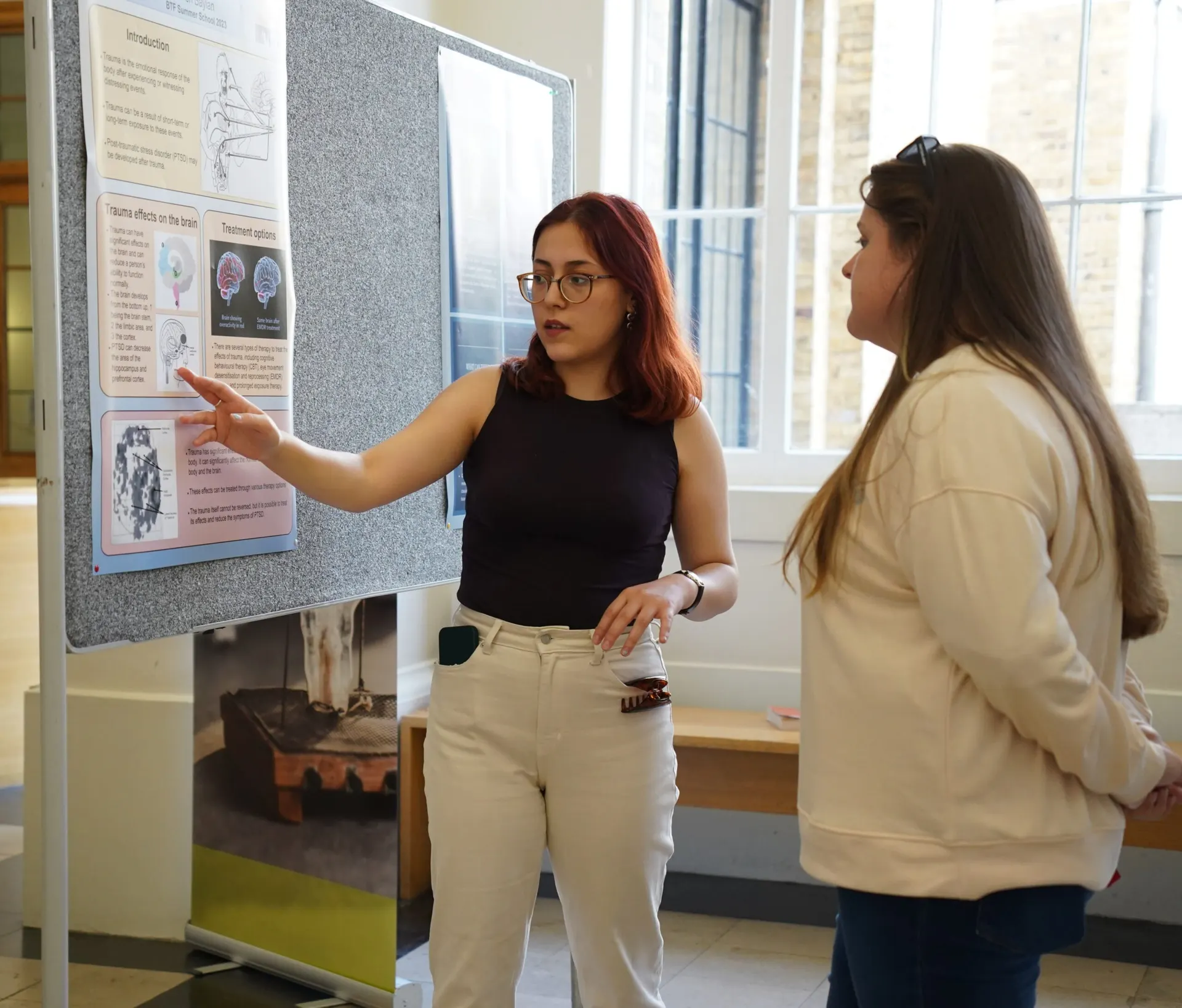
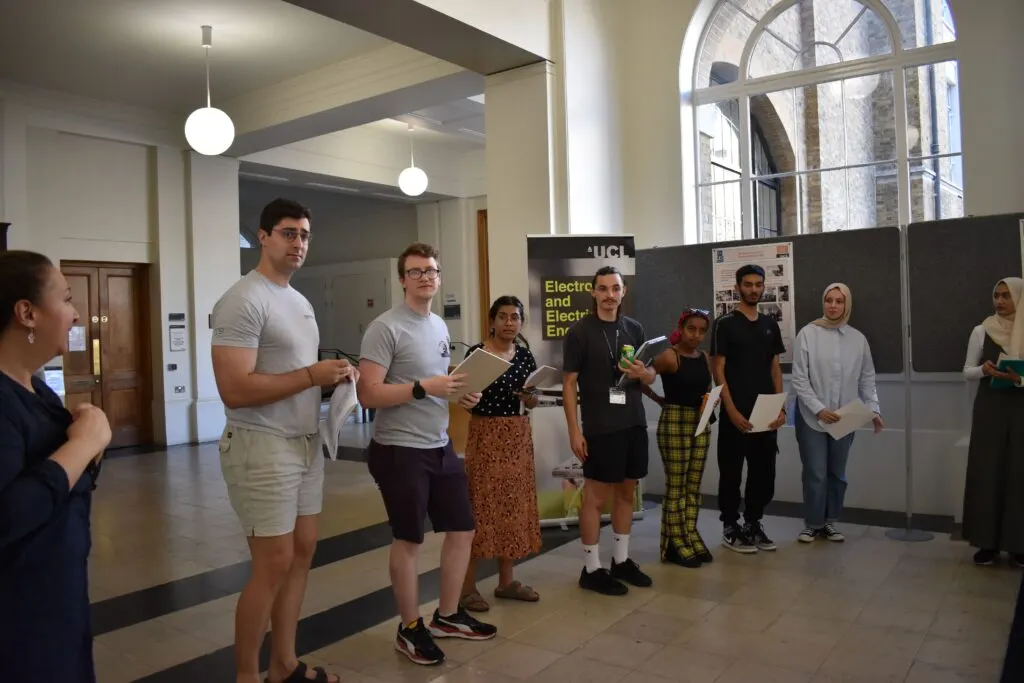
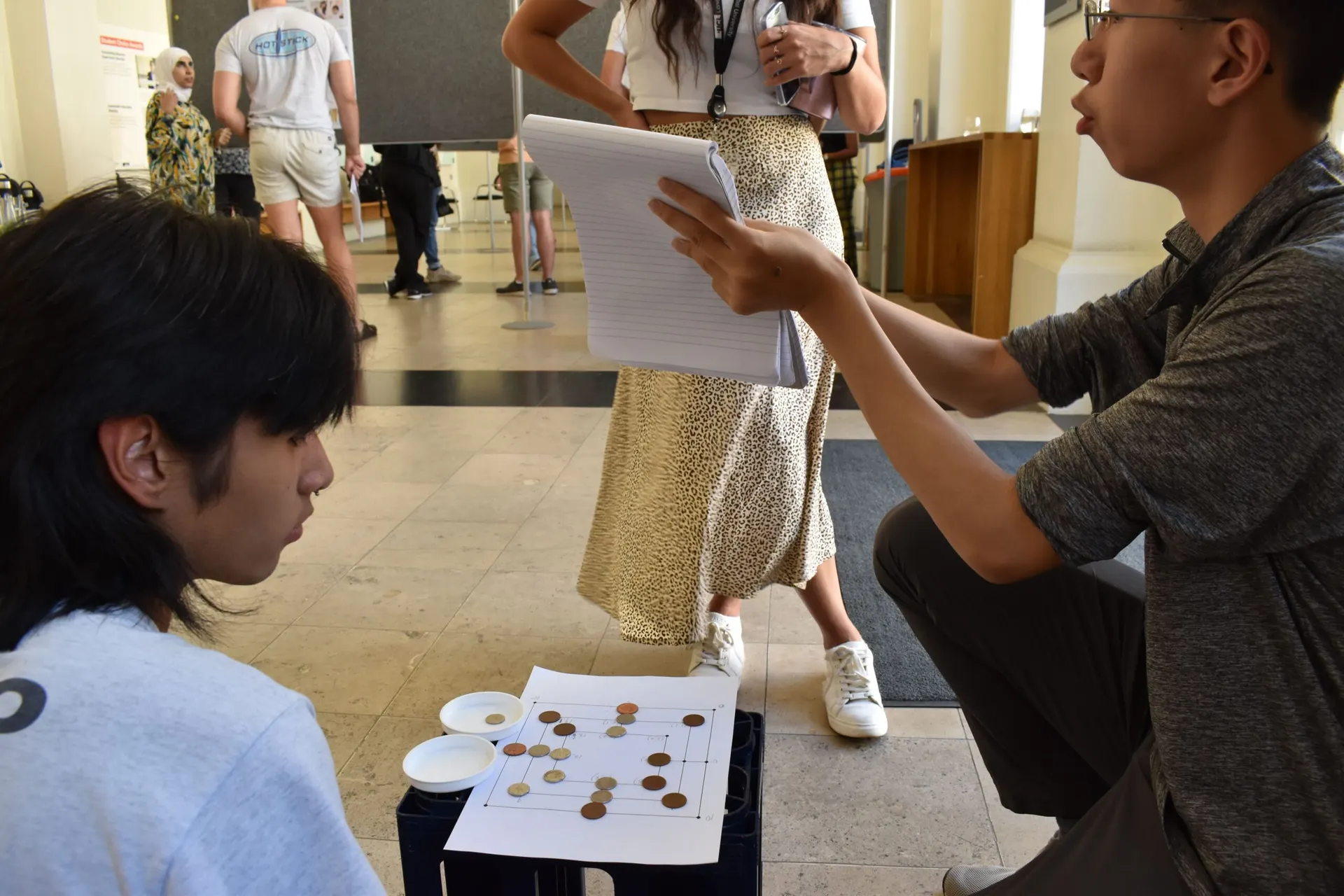
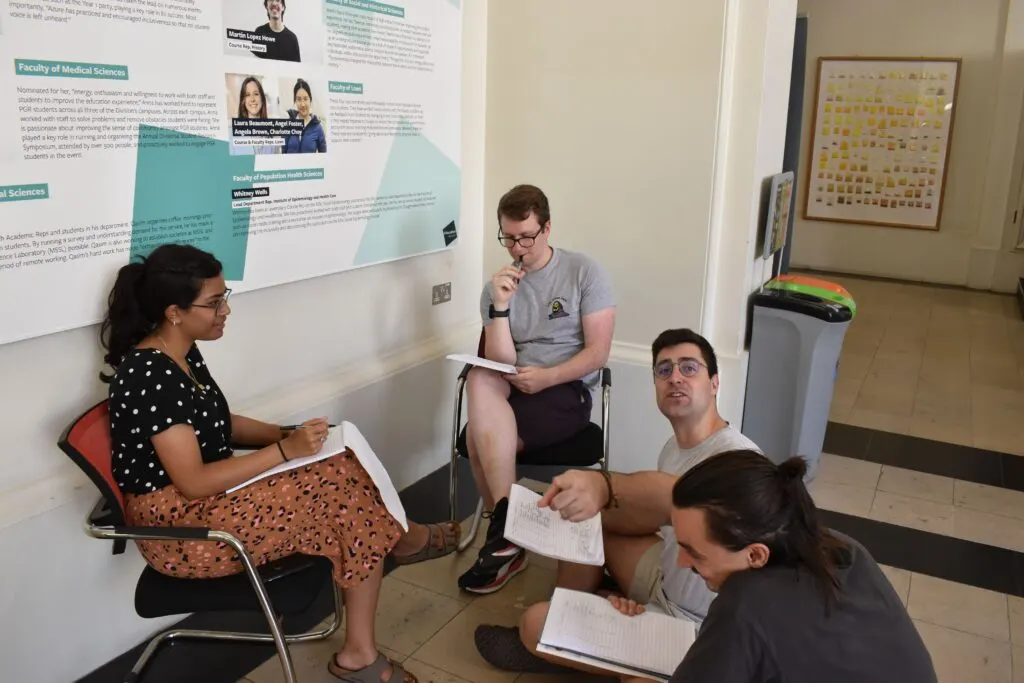
The summer school is an eight-day programme at UCL across two weeks in August: English for Science every morning in level-set groups, practical physics, chemistry, biology and coding every afternoon, and an academic poster presented publicly on the final day. Travel across TfL Zones 1–6, lunch and all materials are covered. Thirty places. Two forms, both required. It suits a young person who needs evidence, confidence and a reference — and who would benefit from being inside a university building before they apply to one.
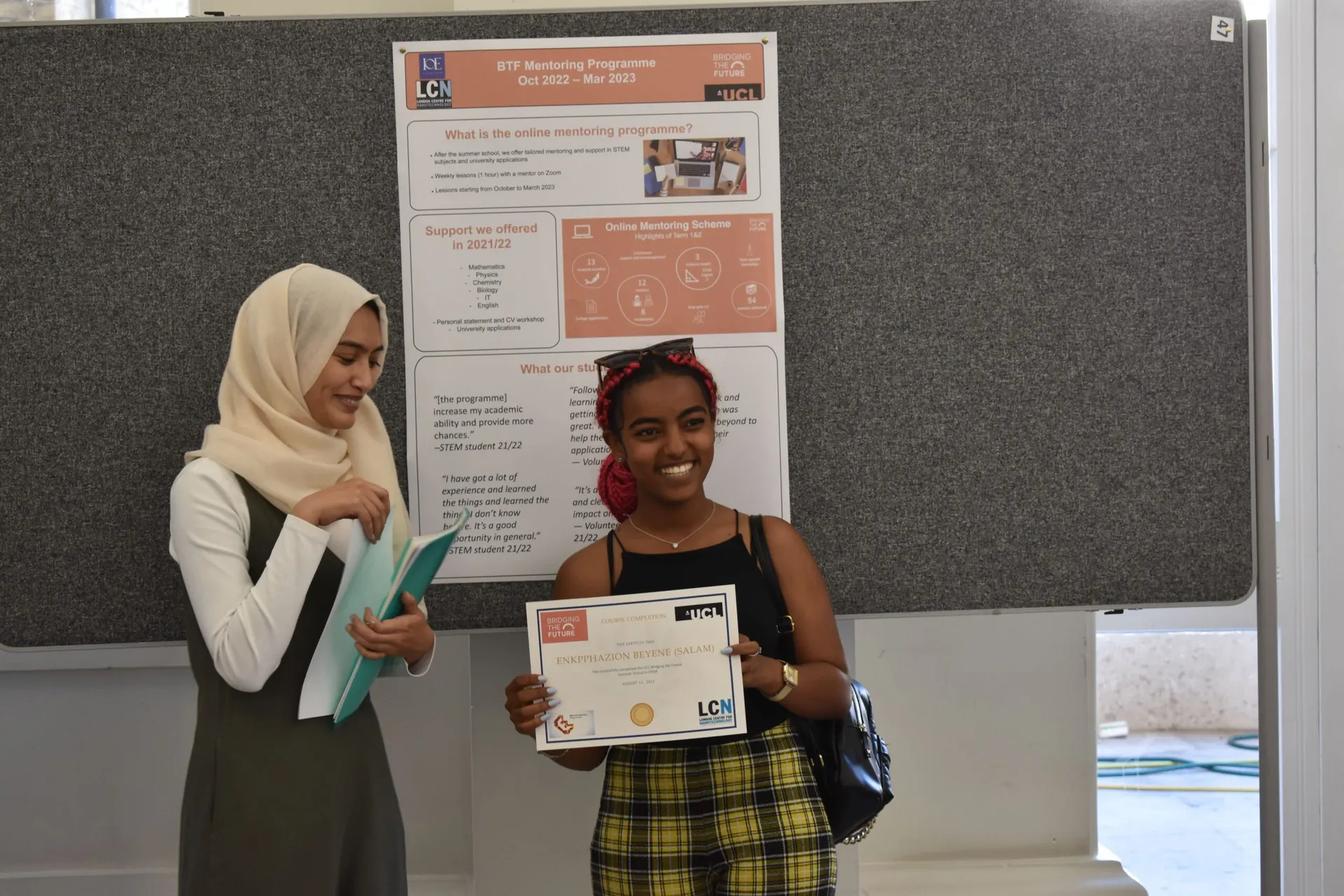
The online mentoring scheme runs October to March, pairing students with volunteer mentors from UCL matched on subject need. Weekly one-to-one or small-group sessions covering homework, coursework, CVs, personal statements, university applications and mock interviews — including medical school and Oxbridge preparation. It suits a young person who is enrolled somewhere but has nobody to ask.
If you are a foster carer or a family member
Two additions to the above.
Consent forms are the most common reason an application fails. Our summer school requires two forms — a student application and a parent, guardian or social worker consent form — and applications arrive every year with only one. If you are the responsible adult, the consent form is your part, and it is time-critical.
The August question is a real one. Eight full days across a fortnight, 10:00 to 16:30, in central London, is a substantial commitment for a household. It is worth talking through the travel, the meals and the days in advance, so that the young person is not deciding on the morning of day one whether they can afford the journey. All of it is covered — but knowing that in advance is what makes it usable.
If you work in a college or a school
Three things that would help more than anything else.
Tell students that free programmes exist. Five per cent of our applicants found us unaided. A single sentence in a tutorial reaches more young people than any campaign we could run.
Distinguish academic English from general ESOL in your provision. A student who completes ESOL and cannot read a physics question has been served the wrong subject. This is a funding problem before it is a teaching one, but the distinction can be made inside a course.
Write the reference early. For a young person with a short UK education history, a tutor’s reference carries disproportionate weight — and is disproportionately hard to write in a hurry.
Where to get better advice than this
We run programmes; we are not an advice service, and on immigration, fee status and casework there are organisations far better placed than we are.
- Refugee Education UK — research, resources and direct support on education pathways.
- Refugee Council — casework and support services across the UK.
- STAR (Student Action for Refugees) — student-led, with a strong focus on university access and equal access campaigns.
- Universities of Sanctuary — the practical index of scholarship and sanctuary provision by institution.
- GOV.UK student finance — the authoritative statement on eligibility.
Three conversations worth having early
Most of the value a supporting adult adds is delivered in a handful of conversations. These are the three that our students say made the difference.
“What did you like studying, before?”
Not what they studied — what they liked. It is a small distinction and it changes the register of the conversation entirely, from assessment to interest. It also produces information you cannot get any other way: a student who lights up about mathematics is telling you which route to research, and a student who mentions a science competition back home is telling you they have a track record that no UK document will show.
It is often the first question in months that treats them as a person with preferences rather than a case with needs.
“Here are two specific things, shall we look at them together?”
Generic encouragement is close to useless. “You could go to university” is not actionable; “UCL runs a preparatory certificate for people without A-levels, and there is a scholarship attached to it — shall we read the page together?” is.
Doing the looking together matters more than it sounds. It models how to find things out, it removes the fear of a form, and it means the young person leaves knowing the name of the thing, which is what lets them ask someone else about it later.
“What is the plan for August?”
Summer is when access programmes run and when unsupported young people disappear. A question asked in May about August is a question that can still be answered. The same question in late July usually cannot.
What tends to go wrong
Five failure modes we see repeatedly, offered so they can be anticipated.
The ESOL loop. A student completes one ESOL level, then the next, then the next. Each course is well taught and none of them leads to a qualification anyone gates on. The break-out is GCSE English and maths, or a foundation year. Ask the college directly: what qualification will they hold at the end of this, and what does it let them do next?
The fee-status surprise. A student applies, is offered a place, and discovers in the summer that they are classified as an international student and there is no loan. Ask the question in November. In writing.
The missing consent form. Applications to programmes for under-18s routinely arrive with the student’s half completed and the guardian’s half missing. If you are the responsible adult, that form is your part of the job.
The reference nobody wrote. A tutor’s reference carries disproportionate weight for a young person with a short UK education history, and it is disproportionately hard to write at short notice. Ask in March, not August.
The plan that lives in one adult’s head. Social workers change. Tutors change. If the education plan exists only in a conversation, it evaporates. Write it down and give the young person a copy — it is theirs, and it is the one thing that survives a change of caseworker.
A note on tone
Two things worth saying plainly, because they come up.
Do not require gratitude. A young person navigating this system is doing something difficult under conditions nobody would choose. They do not owe anyone enthusiasm for it, and an adult who signals otherwise makes themselves harder to ask for help.
Do not treat inconsistency as disinterest. Missed appointments in this population are overwhelmingly about housing moves, asylum interviews, family news, work shifts and mental health — not about motivation. Our mentors converge on the same conclusion:
Sometimes anticipated timelines completely change, and it’s important the mentee is offered support navigating these changes with minimal disruption. Fern, PhD student at UCL and CERN, and BTF mentor
The adults who stay useful are the ones who treat a gap as information and pick the thread back up.
Common questions
I am not an education professional. Am I the right person to do this? Almost certainly yes. Nothing in this guide requires professional expertise — it requires knowing that routes exist and being consistent. The specialist questions go to specialists; the continuity is the part only you can provide.
How do I find out what free programmes exist locally? Start with Refugee Education UK and your local refugee support organisation, both of which usually hold a picture of provision in your area. University widening-participation teams are the other reliable source, and they are almost always pleased to be asked.
What if a young person does not want to study? Then they do not, and that is a legitimate position — particularly for someone who has had very little control over anything for a long time. The useful contribution is making sure the door is described and left open, rather than pushing them through it. Several of our students applied a year after first hearing about us.
Can I refer someone to your programmes directly? Yes. Both programmes are open to 16–22 year olds from refugee, asylum-seeking and forced-migrant backgrounds. Point them at our application page, or ask us a question if you are not sure whether they fit.
Is there an age at which it is too late? No — but the routes change. Under 18 the system has duties towards them and college is straightforward. Over 18 it is Access to HE, foundation years and sanctuary scholarships, all of which exist and all of which require someone to name them.
What if their English is not strong enough yet? Then ESOL is the right first step — with the question above attached: and what does it lead to? Language provision and a qualifications plan are not alternatives; a young person needs both, running in parallel.
Compiled October 2025 and reviewed against our 2026 programme dates. This is general orientation, not immigration or financial advice — please use the specialist organisations listed above for an individual case. Our own figures come from Bridging the Future programme records.
Keep reading
- The GCSE vacuum — the structural reasons this guide is necessary.
- From 1% to 15% — the higher-education routes in more depth.
- Inside a free STEM summer school — what you would be referring a young person into.
- Contact us — if you are supporting someone and are not sure where to start.
Sources & further reading
Every third-party figure quoted above links back to its primary source. Where a statistic is our own, it comes from our programme records.
- Student finance — who qualifies, GOV.UK
- Universities of Sanctuary, City of Sanctuary UK
- Undergraduate Preparatory Certificates, University College London
- Advice, research and resources, Refugee Education UK
- Support for refugees and people seeking asylum, Refugee Council
- Student Action for Refugees (STAR), STAR Network
- Undergraduate application deadlines, UCAS
- Bridging the Future programmes, Bridging the Future
Spotted something out of date, or have a figure we should include? Write to contact@bridgingthefuture.org and we will correct it.